- Your cart is empty
- Continue Shopping

Note: If you do not receive a response from the website, please contact us at kalidinali545@gmail.com and include your Order Number in the message for faster assistance.


£74.00Current price is: £74.00.£130.00 Original price was: £130.00.
£74.00Current price is: £74.00.£130.00 Original price was: £130.00.
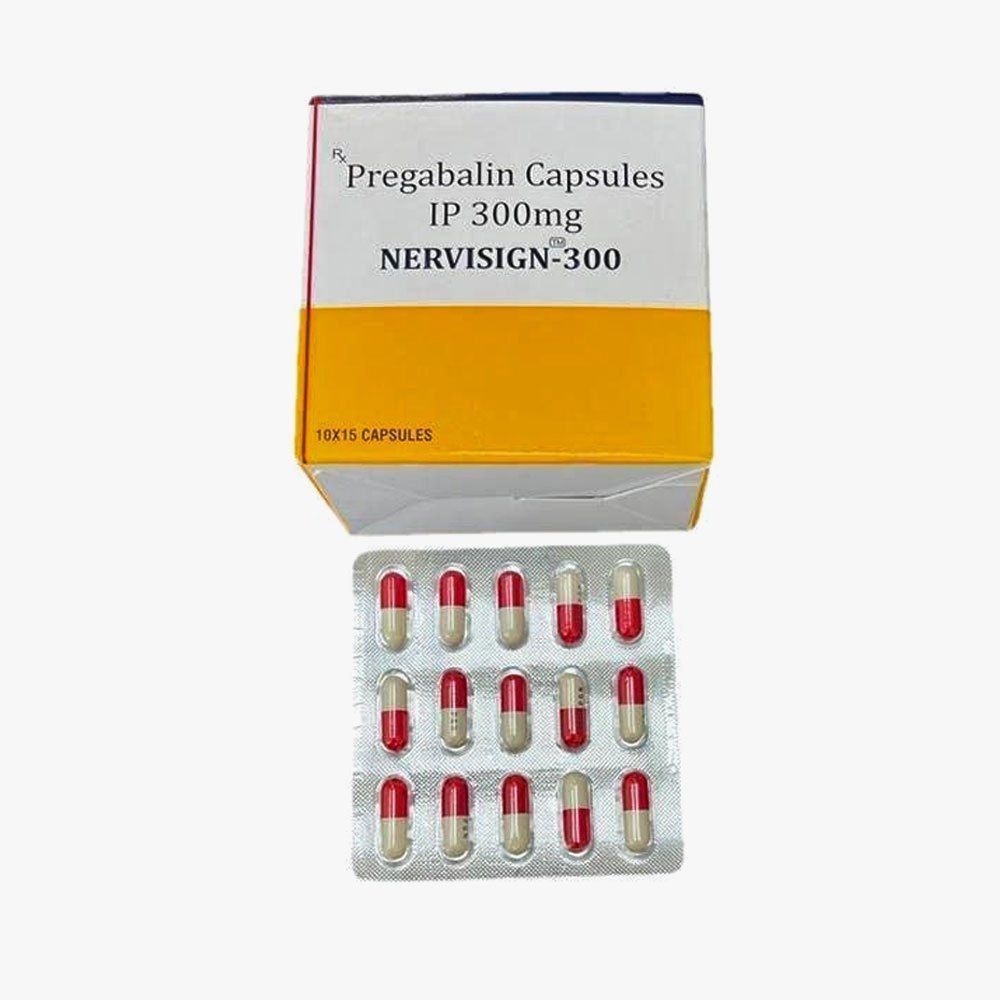
Nervisign 300 mg Capsules Pain Killer – Effective Relief for Neuropathic Pain and Seizures
Nervisign 300mg tablets contain Pregabalin for pain relief, offering effective relief from neuropathic pain and serving as an adjunct therapy for certain types of seizures. Order now for fast, discreet UK-wide delivery.
Nervisign 300 mg Capsules contain pregabalin, a medicine belonging to the gabapentinoid class. Pregabalin acts on the nervous system by influencing the transmission of nerve signals.
Pregabalin is prescribed for certain neurological conditions, including neuropathic (nerve) pain. Depending on the approved product information and the patient’s clinical circumstances, pregabalin may also be prescribed for partial-onset seizures alongside other medicines and generalised anxiety disorder in adults.
Unlike conventional painkillers, pregabalin works by affecting nerve signalling rather than directly treating inflammation or providing general pain relief.
Pregabalin may be prescribed by a healthcare professional for:
1. Neuropathic Pain
Neuropathic pain develops when nerves are damaged or do not function properly. It can cause burning, shooting, stabbing or electric-shock-like sensations, as well as tingling and numbness.
2. Peripheral and Central Nerve Pain
Pregabalin may be prescribed for nerve pain associated with certain conditions, including diabetic nerve damage and pain following shingles.
3. Other Approved Medical Uses
Depending on the applicable product licence, pregabalin may also be prescribed for partial-onset epilepsy and generalised anxiety disorder in adults.
Pregabalin binds to a specific subunit of voltage-gated calcium channels in the nervous system. This influences the release of certain neurotransmitters involved in nerve signalling.
In patients with neuropathic pain, this action can help reduce abnormal pain signalling.
Pregabalin is not an ordinary over-the-counter painkiller and should only be used for conditions assessed by a qualified healthcare professional.
Pregabalin 300 mg is a prescription medicine. The appropriate dose depends on the patient’s condition, kidney function, response to treatment and other medicines.
Pregabalin can also cause serious breathing difficulties, particularly when combined with opioids or other medicines that cause sedation. Seek urgent medical assistance if breathing becomes slow or difficult.
Commonly reported side effects include:
Not everyone experiences side effects. Contact a healthcare professional if symptoms persist or become concerning. Seek emergency assistance for severe breathing difficulties or signs of a serious allergic reaction.
Store Nervisign capsules according to the instructions printed on the original packaging and accompanying patient information leaflet.
Keep medicines out of the reach and sight of children. Do not use capsules beyond their expiry date.
Pregabalin 300mg is a capsule strength containing pregabalin. It may be prescribed for neuropathic pain and, depending on the product’s approved indications, certain seizure disorders and generalised anxiety disorder.
Pregabalin is used to manage certain types of nerve pain. Unlike conventional painkillers such as paracetamol, it works by affecting nerve signalling.
It is prescribed for neuropathic pain, which can involve burning, shooting, stabbing, tingling or electric-shock-like sensations.
Some patients may notice improvement after a few weeks. The response varies depending on the individual and the condition being treated.
300mg is the amount of pregabalin in one capsule, not necessarily the patient’s daily dose. The appropriate daily dose is determined by a prescriber based on individual circumstances.
Yes. Dizziness and sleepiness are common side effects. Patients should avoid driving if affected.
Yes. Pregabalin can cause dependence, tolerance and addiction in some people. Stopping suddenly can cause withdrawal symptoms, so dose reduction should be medically supervised.
Some medicines can interact with pregabalin, particularly opioids and other medicines that cause sedation. Always consult a doctor or pharmacist before combining treatments.
No. Sudden discontinuation can cause withdrawal symptoms and may increase seizure risk in people taking it for epilepsy. A healthcare professional should guide any reduction.
| ⚠️ Important Medical Disclaimer | Always consult your GP or a qualified healthcare professional before starting any medication. Medicines may not be suitable for everyone and can cause side effects or interact with other treatments. Do not exceed the recommended dosage and carefully read the patient information leaflet provided with your medicine. If you experience any adverse reactions, seek medical advice immediately. Prescription-only medicines should only be used with a valid prescription from a licensed healthcare provider. This website provides information for general guidance and research purposes only and should not be considered medical advice, diagnosis, or treatment. |
|---|