- Your cart is empty
- Continue Shopping

Note: If you do not receive a response from the website, please contact us at kalidinali545@gmail.com and include your Order Number in the message for faster assistance.


£65.00Current price is: £65.00.£80.00 Original price was: £80.00.
£65.00Current price is: £65.00.£80.00 Original price was: £80.00.
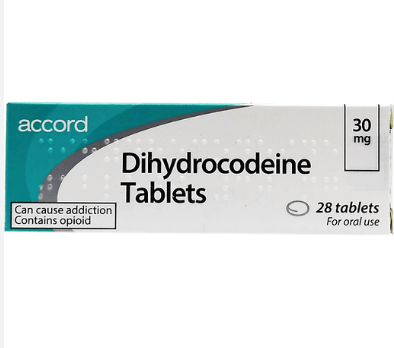
Dihydrocodeine 30mg Tablets Accord — Opioid Pain Relief for Moderate to Severe Pain
Dihydrocodeine 30mg Accord is a prescription-grade opioid analgesic. It relieves moderate to severe pain including toothache, back pain, sciatica, dental pain, migraines, and period pain. 28 film-coated tablets per box. Fast, discreet delivery across the UK.
Dihydrocodeine is a semi-synthetic opioid analgesic.
It is a codeine derivative — structurally similar to codeine but approximately twice as potent.
It works by binding to mu-opioid receptors in the brain and spinal cord.
This reduces the perception of pain signals reaching the brain.
It also has mild cough suppressant and antidiarrhoeal properties.
Dihydrocodeine 30mg is classified as a Schedule 5 controlled drug in the UK.
Dental pain caused by abscesses, broken teeth, or post-extraction discomfort can be severe.
Dihydrocodeine 30mg provides stronger pain relief than over-the-counter options like ibuprofen or paracetamol.
It is commonly used as a bridging pain treatment while waiting for dental treatment.
It does not treat the underlying dental infection — dental care is still required.
Dihydrocodeine 30mg tablets is one of the most effective oral analgesics for moderate-to-severe lower back pain.
It relieves both acute back pain from muscle injury and chronic pain from degenerative disc conditions.
It is often prescribed when NSAIDs (such as ibuprofen or naproxen) have not provided sufficient relief.
Sciatica causes sharp, radiating nerve pain running from the lower back into the leg.
This neuropathic pain element can be particularly difficult to control with standard analgesics.
Dihydrocodeine 30mg targets opioid receptors in pain pathways that process both nociceptive and nerve pain signals.
It reduces the intensity and frequency of sciatic flare-ups.
Severe migraines that do not respond to triptans or standard painkillers may require opioid rescue medication.
Dihydrocodeine 30mg can be used as a rescue analgesic during acute migraine attacks.
It works best when taken at the earliest sign of a migraine developing.
Opioid medications are not first-line treatment for migraine. They should only be used when clinically recommended and prescribed, due to the risk of medication overuse headache with frequent use.
Severe primary dysmenorrhoea (period pain) can cause significant daily disruption.
Dihydrocodeine 30mg provides effective pain control when NSAIDs alone are insufficient.
It acts centrally on the pain response, reducing the severity of uterine cramping pain perception.
For severe tension headaches or cluster headaches unresponsive to standard analgesics, dihydrocodeine 30mg offers stronger pain relief.
However, regular use for headaches carries a risk of medication overuse headache (MOH).
It should be used sparingly — no more than 2 to 3 days per week for headache management.
Take one 30mg tablet every 4 to 6 hours as needed for pain.
Do not exceed 180mg (six tablets) in any 24-hour period.
Swallow whole with water. Can be taken with or without food.
Taking with a small amount of food may reduce nausea risk.
Do not use for longer than 3 days without medical review.
Dihydrocodeine 30mg is an opioid. It can cause dependence with prolonged use. Do not exceed the prescribed dose. Do not combine with alcohol, benzodiazepines, or other CNS depressants — this is dangerous and can cause respiratory depression.
Common: nausea, constipation, dizziness, drowsiness, dry mouth.
These typically reduce as the body adjusts within the first few days.
Taking a stool softener alongside dihydrocodeine can help manage opioid-induced constipation.
Serious but rare: respiratory depression, allergic reaction, confusion.
Do not drive or operate machinery while taking this medication.
Accord Healthcare is one of the UK’s and Europe’s most trusted generic pharmaceutical companies.
They supply directly to the NHS and UK community pharmacies.
Their manufacturing plants hold EU GMP certification.
Accord Dihydrocodeine 30mg is produced to the same specification as NHS-dispensed stock.
Dihydrocodeine 30mg is used to relieve moderate to severe pain. Common conditions treated include toothache and dental abscess pain, lower back pain, sciatica, migraines, tension headaches, period pain (dysmenorrhoea), and post-operative pain. It is an opioid analgesic that works by binding to mu-opioid receptors in the central nervous system, reducing pain signal transmission to the brain.
Yes. Dihydrocodeine is approximately twice as potent as codeine on a milligram-for-milligram basis. A 30mg dose of dihydrocodeine provides substantially stronger analgesia than a 30mg dose of codeine. This makes it more effective for moderate to severe pain where codeine 30mg has been insufficient.
Dihydrocodeine 30mg typically begins working within 20 to 30 minutes of ingestion. Peak analgesic effect is usually reached within 1 to 1.5 hours. The duration of effect is approximately 4 to 6 hours per dose.
Yes. Dihydrocodeine 30mg is frequently used for dental pain — including toothache, dental abscesses, and post-extraction pain — when over-the-counter options like ibuprofen or paracetamol are insufficient. It provides stronger, centrally-acting pain relief while you await dental treatment. It does not treat the underlying infection, so dental care should still be sought.
Yes. Dihydrocodeine 30mg is classified as a Schedule 5 Controlled Drug under the UK Misuse of Drugs Regulations. This means it is subject to specific regulations around supply and prescribing. It is a prescription-only medicine (POM) in the UK.
| ⚠️ Important Medical Disclaimer | Always consult your GP or a qualified healthcare professional before starting any medication. Medicines may not be suitable for everyone and can cause side effects or interact with other treatments. Do not exceed the recommended dosage and carefully read the patient information leaflet provided with your medicine. If you experience any adverse reactions, seek medical advice immediately. Prescription-only medicines should only be used with a valid prescription from a licensed healthcare provider. This website provides information for general guidance and research purposes only and should not be considered medical advice, diagnosis, or treatment. |
|---|