- Your cart is empty
- Continue Shopping

Note: If you do not receive a response from the website, please contact us at kalidinali545@gmail.com and include your Order Number in the message for faster assistance.


£80.00
Add to cart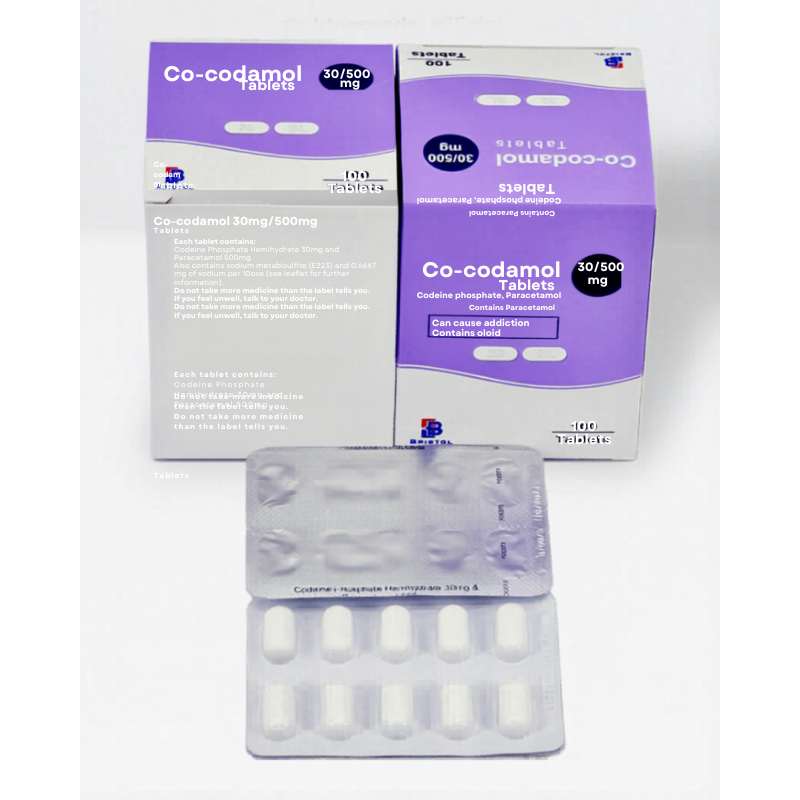
£80.00
Co-codamol 30/500mg Tablets Bristol used for the treatment of:
Buy Online Co-codamol 30/500mg Tablets Bristol
If you’ve been told the co-codamol you bought from a pharmacy shelf isn’t the same as the one on a prescription, that’s correct. There are three strengths in the UK, and only the lowest is available without a prescriber. Here’s what separates them, and why the line is drawn where it is.
Every co-codamol tablet combines codeine with 500mg of paracetamol. What changes is the codeine.
Two reasons, and both are about the same tablet.
Codeine. Codeine is an opioid. At 30mg, dependence can develop within about two weeks of continuous use — faster than most people expect, and without any intention to misuse it. Tolerance builds, the dose stops working, and stopping produces withdrawal. A prescriber’s job is to decide whether that risk is justified for your specific situation, and to set a duration limit before you start.
Paracetamol. Each tablet also carries 500mg of paracetamol, which caps you at eight tablets in 24 hours regardless of pain. Paracetamol overdose causes liver damage that often produces no symptoms until it’s advanced. Combination tablets make accidental overdose easier, particularly if you’re also taking something else containing paracetamol without realising.
For most people, co-codamol 8/500 or ibuprofen at pharmacy strength. Pharmacists can also supply some higher-strength NSAIDs. Anything containing more than 12.8mg of codeine requires a prescriber — no UK pharmacy can legally sell it to you otherwise, and any site offering to is operating outside the law and probably outside the country.
If you’re taking a combination product, always check what else you’re taking for paracetamol content.
That’s worth a conversation rather than a stronger tablet. Pain that hasn’t responded to over-the-counter treatment after a week or two usually needs a cause identified, not just heavier suppression. Options:
| ⚠️ Important Medical Disclaimer | Always consult your GP or a qualified healthcare professional before starting any medication. Medicines may not be suitable for everyone and can cause side effects or interact with other treatments. Do not exceed the recommended dosage and carefully read the patient information leaflet provided with your medicine. If you experience any adverse reactions, seek medical advice immediately. Prescription-only medicines should only be used with a valid prescription from a licensed healthcare provider. This website provides information for general guidance and research purposes only and should not be considered medical advice, diagnosis, or treatment. Select 6 more words to run Humanizer. |
|---|