- Your cart is empty
- Continue Shopping



£ 59
Add to cart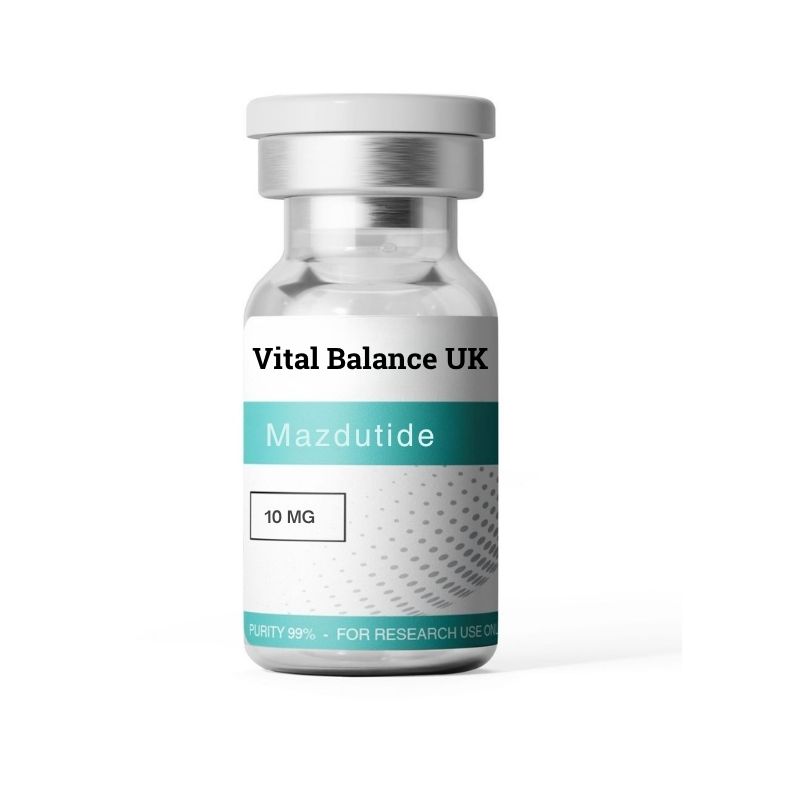
£ 59
Mazdutide 10mg is widely studied for its promising role in research related to metabolic pathways, weight management, and glucose regulation. As an innovative peptide, it is being investigated for its potential effects on appetite control and insulin sensitivity.
Mazdutide 10mg is a synthetic GLP-1 receptor agonist peptide widely used in preclinical and laboratory research to explore metabolic regulation, appetite control, and glucose homeostasis. This research-grade peptide provides scientists with a reliable tool to investigate energy balance, endocrine pathways, and weight management mechanisms under controlled laboratory conditions.
Researchers in the UK can buy British peptides to obtain high-purity Mazdutide for experimental use.
Mazdutide is a long-acting glucagon-like peptide-1 (GLP-1) receptor agonist, designed to mimic the effects of endogenous GLP-1 in preclinical studies. In laboratory research, Mazdutide is primarily used to investigate:
Preclinical studies indicate that Mazdutide binds selectively to GLP-1 receptors, enhancing insulin secretion in a glucose-dependent manner and slowing gastric emptying. Its prolonged activity allows researchers to model chronic metabolic effects in laboratory studies.
Mazdutide is supplied as a lyophilized research-grade peptide, ensuring stability and reproducibility for scientific investigations:
Chemical Name: Synthetic GLP-1 Receptor Agonist Peptide
Molecular Formula: C<sub>x</sub>H<sub>y</sub>N<sub>z</sub>O<sub>a</sub>S<sub>b</sub> (varies slightly based on synthesis)
Molecular Weight: ~4200 Da
Form: Lyophilized powder, research-grade
Purity: ≥ 99%
This chemical composition allows researchers to accurately study receptor binding, metabolic signaling, and downstream physiological effects in preclinical models.
Mazdutide exerts its effects through GLP-1 receptor agonism, providing a precise model for examining metabolic and endocrine pathways:
GLP-1 Receptor Activation: Stimulates glucose-dependent insulin secretion, enhancing glycemic control in experimental models.
Satiety and Appetite Regulation: Preclinical studies show Mazdutide slows gastric emptying and promotes satiety, allowing researchers to study caloric intake and energy balance.
Metabolic Modulation: Influences lipid metabolism, energy expenditure, and body weight regulation in controlled laboratory settings.
Neuroendocrine Signaling: By activating central and peripheral GLP-1 receptors, Mazdutide facilitates studies on hormonal pathways influencing metabolism and feeding behavior.
Long-Acting Peptide: Its extended half-life allows for research into chronic metabolic effects without frequent administration, providing a stable model for long-term studies.
Through these mechanisms, Mazdutide enables researchers to explore complex metabolic, neuroendocrine, and energy homeostasis pathways in preclinical studies.
High-Purity Peptide: ≥98% purity ensures accurate, reproducible experimental results.
Long-Acting GLP-1 Agonist: Facilitates chronic metabolic studies without frequent dosing.
Versatile Laboratory Applications: Suitable for obesity, metabolic, neuroendocrine, and gastrointestinal research.
Integrated Metabolic Model: Provides insights into appetite, weight, and energy regulation.
Stable Lyophilized Formulation: Ensures long-term stability and reproducibility in preclinical studies.
To maintain Mazdutide’s activity and integrity during research:
Store in a cool, dry, and dark environment
Short-term storage: Refrigerate at 2–8°C
Long-term storage: Freeze at −20°C or below
Avoid repeated freeze-thaw cycles
Reconstitute using sterile laboratory-grade solvents
All handling must comply with institutional and laboratory safety protocols.
| Note | To keep prices affordable, most peptide vials are supplied in plain bottles without labels. This does not affect product quality or authenticity in any way. |
|---|---|
| ⚠️ Important Medical Disclaimer | Always consult your GP or a qualified healthcare professional before starting any medication. Medicines may not be suitable for everyone and can cause side effects or interact with other treatments. Do not exceed the recommended dosage and carefully read the patient information leaflet provided with your medicine. If you experience any adverse reactions, seek medical advice immediately. Prescription-only medicines should only be used with a valid prescription from a licensed healthcare provider. This website provides information for general guidance and research purposes medicine only and should not be considered medical advice, diagnosis, or treatment. |